The 10 best space heaters
The Vornado VH200 is the best space heater for most rooms, the Dr. Infrared DR-968 is the one for a big living room, and the De'Longhi TRD40615T oil-filled radiator is the one to sleep next to. Those three cover most buyers, and the other seven picks below cover the desk, the bathroom, the budget shelf, and the living room that wants a fireplace glow. One fact should frame every choice: nearly every plug-in heater tops out at 1500 watts, and 1500 watts makes the same 5,118 BTU of heat per hour whether the box cost 25 dollars or 500. Price buys quieter fans, tighter thermostats, longer warranties, and better safety hardware, never more heat. Each pick below gets its specs, who it fits, and where it falls short, followed by what a heater does to your electric bill and the safety rules that keep it out of the fire statistics.

The list
All 10 picks at a glance
Is there really a "most energy efficient" space heater?
No, and knowing why saves you from most of the marketing in this category. Every plug-in electric heater, whether it is ceramic, infrared, oil-filled, or a designer panel, turns essentially all of the electricity it draws into heat. The Department of Energy puts it plainly: electric resistance heating is 100 percent efficient at the point of use. A 1500-watt heater produces about 5,118 BTU of heat per hour, and that number does not move with the brand, the type, or the price tag. It is also why ENERGY STAR does not certify portable space heaters at all; there is no efficiency difference to rate.
So when a listing sells an "energy-efficient" heater, it is selling identical heat in nicer packaging. What actually separates a good heater from a bad one is how the heat is delivered, how quiet and safe the unit is, how precisely its thermostat holds a temperature, and whether it survives more than a season or two. That is what the ranking below is built on.
Same heat, different price
Three 1500-watt heaters, one identical output
Budget ceramic cube
~$25
5,118 BTU/hr
Oil-filled radiator
~$150
5,118 BTU/hr
Dyson heater-purifier
~$550
5,118 BTU/hr
The 10 best space heaters
These are ranked from the best overall pick down to the best budget option, with a spread of types so there is a right answer for a big living room, a quiet bedroom, a bathroom, a desk, and a house with kids or pets. Every heater here has automatic overheat protection; where a model skips the tip-over switch, the review says so, because that difference matters if the heater can be knocked over.
1. Vornado VH200: best overall
Most fan heaters cook the three feet in front of the grille and leave the rest of the room cold. The VH200 works differently: it spins the air into a slow circulating current that mixes warm air through the whole room, so a bedroom or office reaches an even temperature without a hot spot. It does this quietly, with a low fan tone that fades into the background, and the case stays cool enough to touch, backed by a tip-over switch and a 5-year warranty that doubles what most of this category offers.
Its one weak point is the thermostat: an unmarked dial with no temperature numbers, so the first few evenings are spent finding the notch that matches the temperature you want. The AVH10 below fixes that with a digital readout for about 30 dollars more. Sized for rooms up to roughly 150 to 250 square feet; for a bigger space, move up to the DR-968.
2. Dr. Infrared DR-968: best for a large room
The DR-968 is a 24-pound wood-cabinet heater on casters, and the extra size buys the best heat distribution of any plug-in unit here. Inside are two heating systems, a quartz infrared element and a ceramic element, with a large low-speed blower that moves a high volume of air at about 39 decibels, quieter than most small heaters working half as hard. The digital thermostat holds a set temperature between 50 and 86 degrees, and the 12-hour timer and remote are usable rather than token. The heating elements are rated for tens of thousands of hours; when a unit does eventually fail, it is usually the control board or the remote, not the element.
Ignore the "up to 1,000 square feet" claim on the box. It is still a 1500-watt heater making the same 5,118 BTU per hour as everything else on this list; what the cabinet and blower do is spread that heat across a large living room instead of piling it up in a corner. Two things keep it out of some bedrooms: the display is bright at night, and the soft blower hum is audible to a light sleeper.
3. De'Longhi TRD40615T: best for a bedroom
An oil-filled radiator has no fan and no exposed glowing element. Electricity warms sealed oil inside the fins, and the fins radiate steady, even heat in silence, which makes this the default pick for a room where you sleep. The TRD40615T adds a 24-hour timer, so it can warm the bedroom before you get in and shut down after you fall asleep, and its sealed design is why oil-filled radiators are the longevity champions of this category: ten to twenty years of service is normal, because there is nothing to wear out except the thermostat.
Know what you are buying into. It takes 20 to 30 minutes to affect room temperature, so it is the wrong tool for warming a cold room fast; run it ahead of time on the timer instead. The metal fins tick and click as they expand and contract, loudest right after shutoff, and that is normal thermal movement, not a defect. Expect a faint oil or paint smell on the first run that burns off. At about 25 pounds on wheels, it rolls fine but does not carry well.
4. Vornado AVH10: best thermostat
The single most common frustration with space heaters is a thermostat that overshoots: the room swings warm, then cold, then warm again, because a cheap dial senses the heater's own warm air instead of the room. The AVH10 is the fix. Set an actual temperature on the digital display and its auto climate mode adjusts both heat output and fan speed to hold it, which means fewer swings and less electricity wasted overshooting the mark. It shares the VH200's whole-room circulation, cool-touch case, tip-over switch, and 5-year warranty.
At around 45 decibels on high it is among the quietest fan-forced heaters made, and the low, wide body throws its air cone across a bigger footprint than a tall cube. If the VH200's unmarked dial would drive you crazy, this is where the extra 30 dollars goes.
5. Lasko 755320: best tower
The 755320 is the best-selling shape in the category done well: a 23-inch, 6.6-pound tower that oscillates to sweep heat across a room instead of beaming it at one chair. The digital thermostat takes a real temperature setting, the 8-hour timer covers an evening, and the remote means not crossing the room to adjust it. For a living room or den where floor space is tight, it does most of what the Vornados do for less money.
Two flaws to weigh. It has overheat protection but no tip-over switch, so it belongs on flat floor away from foot traffic, not in a kid's room. And tall thin ceramics as a class have a known failure mode where the internal thermal fuse gives out and the unit goes completely dead, usually after a season or two of heavy use. The 3-year warranty covers it; keep the receipt.
6. Honeywell HCE200W UberHeat: best for a desk
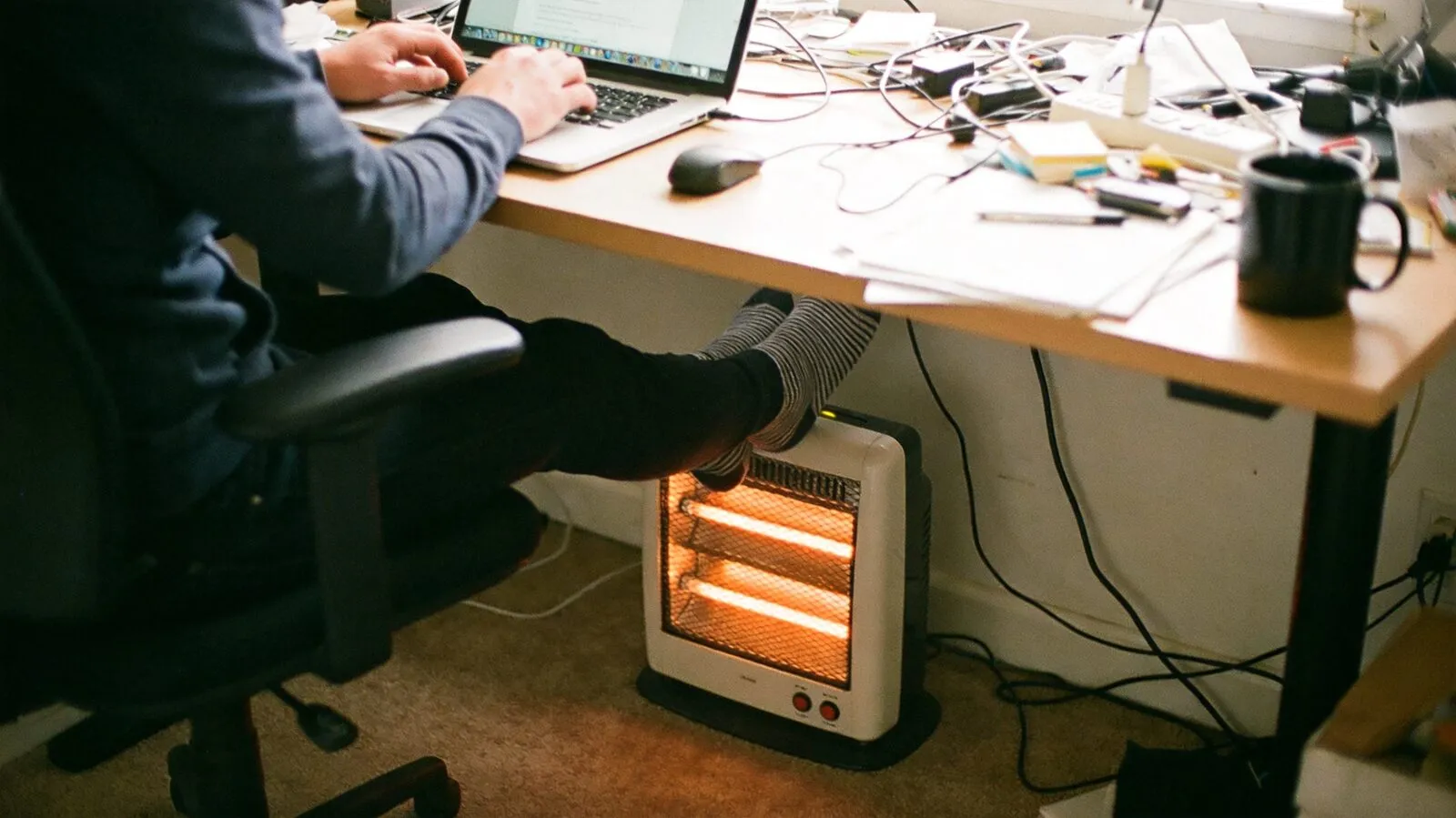
For warming one person at a desk, the UberHeat is the pick over the cheaper Lasko cube for one reason: safety hardware. At 3.8 pounds it still carries a tip-over switch, overheat protection, and a cool-touch housing, the full set that most heaters under 40 dollars skip. Output is strong for the size; it brings a 10-by-12 office up to temperature quickly and holds it.
It earns its spot at a desk and loses it in a bedroom: the small fan is pushed hard and this is one of the loudest heaters in its class, around 66 decibels on high. The dial thermostat also swings a few degrees either side of where you set it. Neither matters much next to a keyboard; both matter next to a bed.
7. Lasko CD08200: best for a bathroom
Almost no space heater is rated for a bathroom, and using a standard one there is a shock hazard. The CD08200 is the exception, built with an ALCI plug, the same leakage-current protection as a hair dryer, which cuts power instantly if current leaks toward water. Its one-touch burst mode runs full heat for an hour and shuts off, which matches how a bathroom actually gets used: warm it for the shower, forget about it.
It is a small-room tool, sized for the bathroom itself rather than anything larger, and even with the ALCI plug it should go into a GFCI outlet, up on the vanity or floor away from the tub, never where it can fall into water. For any other room, the picks above do more for the money.
8. Duraflame DFI-5010: best fireplace look
The DFI-5010 is a 34-pound metal stove with a convincing three-dimensional flame effect, five brightness levels, and the trick that justifies it: the flames run with the heat off, so it earns its spot in the room all year. As a heater it is a quiet infrared unit with a digital thermostat and remote, and the enclosed body has no exposed element to touch.
Buy it for the ambiance and treat the heat as a bonus. Despite the "1,000 square feet" marketing it is the same 1500 watts as everything here, and the small fan means the warmth is felt within a few feet of the unit rather than across a great room. If maximum heat spread matters more than the look, the DR-968 costs less and distributes better.
9. Dyson HP07 Purifier Hot+Cool: the premium pick, with caveats
Judged purely as a heater, the HP07 makes no sense: it puts out the identical 5,118 BTU per hour as a 30-dollar ceramic cube. What the money buys is a three-season machine, a HEPA air purifier that runs year round, a cooling fan for summer, and heat in winter, controlled by an app and a thermostat that holds a setpoint in exact 1-degree steps. The bladeless tower has no exposed elements and shuts off when tipped, which makes it one of the safest formats around children.
Buy it if you want the purifier and the fan anyway and the heating is the third feature. Buy the Vornado and keep roughly 450 dollars if you just want heat. There is no middle position where the HP07 wins on warmth per dollar.
10. Lasko 754200: best budget
The 754200 has been the 25-dollar answer for decades: a 3.7-pound cube with a carry handle that puts out the same full 1500 watts as heaters costing ten times more. For a desk, a workbench, or a spare room used a few hours a week, it does the job, and the fan-only mode is a small bonus in summer.
The price shows up in three places. It has no tip-over switch, only overheat protection, so it stays on the floor away from kids, pets, and foot traffic. New units give off a plastic smell for the first few runs, which Lasko acknowledges and which fades with use. And cheap ceramics are a coin flip on lifespan: a portion die at the internal thermal fuse after a season or two, while others run for years. At this price the 3-year warranty is the tiebreaker. Never run it unattended or while you sleep.
Are space heaters expensive to run?
They are cheap to buy and can be expensive to run, and the math takes one line. A 1500-watt heater uses 1.5 kilowatt-hours every hour, so the cost per hour is 1.5 times your electricity rate. At the current national average of about 18 cents per kilowatt-hour, that is roughly 27 cents an hour at full blast, and about 65 dollars a month at 8 hours a day. Your rate moves that number far more than your choice of heater does. For the full hour-by-hour and monthly math, including what a heater adds to a typical bill, see our guide to how much electricity a space heater uses.
Cost to run a 1500-watt heater
Same heater, very different bill by electricity rate
Low rate · about 11¢/kWh
Washington, Idaho, Louisiana, North Dakota
~$40/mo
Average rate · about 18¢/kWh
Current US national average
~$65/mo
High rate · about 30¢/kWh
California, Massachusetts, Connecticut
~$108/mo
A space heater saves money exactly one way: heat the single room you occupy and set the central thermostat back for the rest of the house. Run it that way and you are paying to heat 150 square feet instead of 2,000. Run heaters in several rooms and the equation collapses; three 1500-watt heaters at 8 hours a day cost around 190 dollars a month at average rates, roughly triple what a heat pump pays to deliver the same heat, because a heat pump moves heat instead of making it. For heating a whole home, resistance heat of any kind is the wrong tool. If that is the actual problem you are solving, our guide to what a heat pump costs covers the better path.
What size space heater do I need for my room?
Figure about 10 watts of heating per square foot of a reasonably insulated room. A 1500-watt heater is therefore sized for roughly 150 square feet, a bedroom or small office, and it converts to about 5,118 BTU per hour if you are comparing against furnace or heat pump sizing. The coverage claims printed on boxes, 300, 500, or 1,000 square feet, describe how far a blower can push air under ideal conditions, not how much space the heater can actually keep warm. Treat any single plug-in unit as a one-room heater. A drafty, uninsulated, or high-ceiling room needs more than the rule of thumb, and since no standard plug-in heater can exceed 1500 watts, the practical answer for a big cold space is to heat the corner of it you occupy, or to look at a wired-in solution like the ones in our garage heater guide.
Which space heater is safest, and can you leave one on overnight?
Space heaters cause about a third of home heating fires and most of the deaths from them, which is a worse ratio than any other heating equipment. The deaths cluster around a few preventable mistakes, so the rules are short and worth following exactly.
The rules that prevent the fires
Five habits, every heater, every time
- 1
Keep three feet of clearance on all sides, away from bedding, curtains, furniture, and anything else that can burn. Heaters placed too close to combustibles account for the largest share of fatal fires.
- 2
Plug it straight into a wall outlet, never an extension cord or power strip. A 1500-watt heater pulls about 12.5 amps continuously, enough to melt cords, strips, and worn outlets. If the plug or the outlet faceplate feels hot, stop using that outlet and have it checked.
- 3
Expect breaker trips on shared circuits. That same 12.5 amps nearly fills a standard 15-amp bedroom circuit, so a heater sharing a circuit with a TV or a second heater will trip the breaker. One heater per circuit.
- 4
Look for both automatic shutoffs, tip-over and overheat. Where a pick on this list lacks the tip-over switch, the review says so, and those models belong on open floor away from traffic.
- 5
Around kids and pets, buy cool-touch and pick a format that shuts off when knocked over, or one with no exposed hot surfaces at all.
On running one overnight: the standard advice from fire agencies is to turn space heaters off when you leave the room or go to sleep, and that is the advice for every fan-forced ceramic here. If a bedroom genuinely needs heat through the night, the safest setup is the oil-filled radiator, no fan, no exposed element, a thermal cutoff, and a timer that shuts it down after you fall asleep, placed on hard floor with full clearance and plugged straight into the wall.
Ceramic vs infrared vs oil-filled: what is the difference?
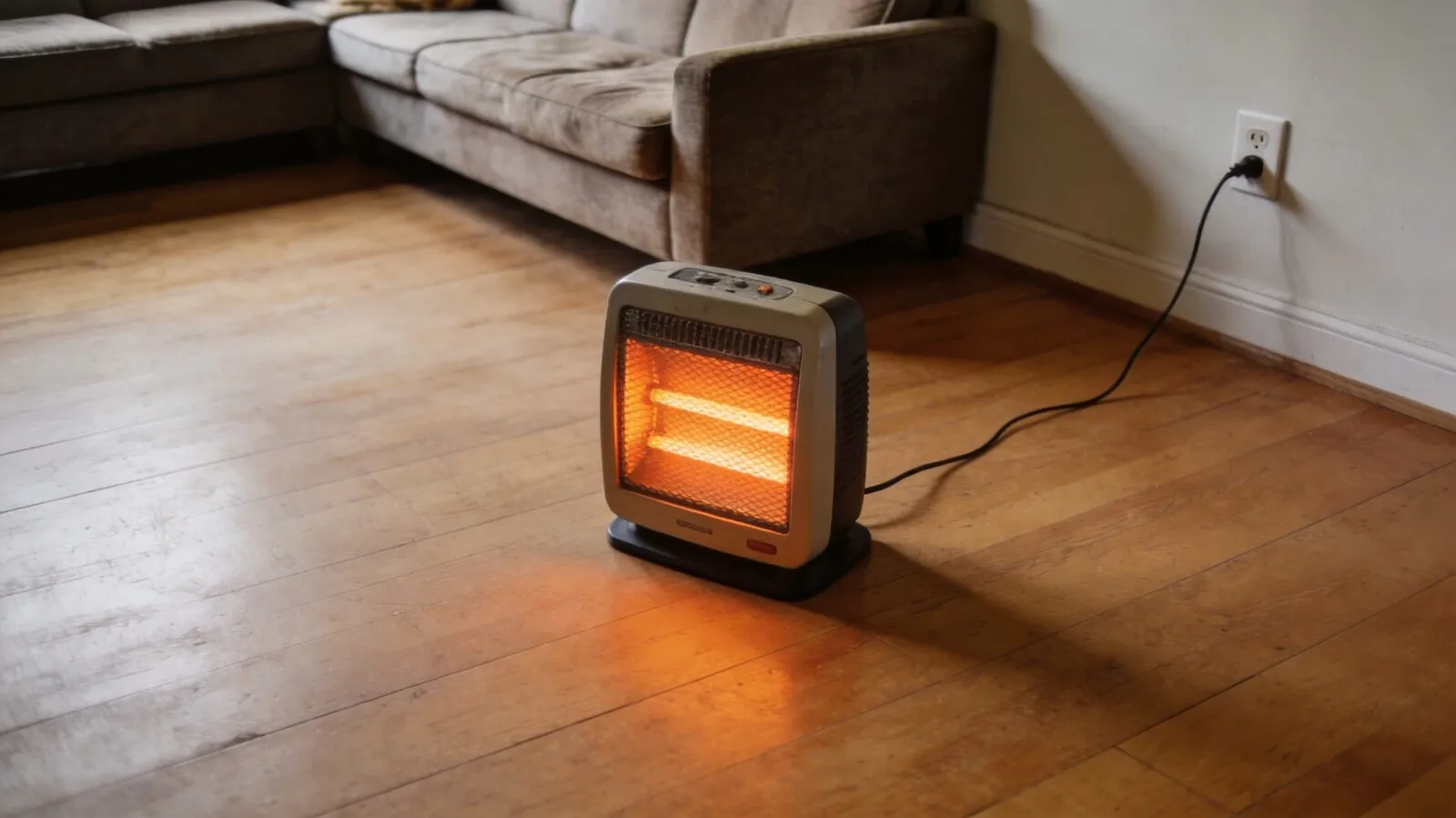
Since every type costs the same to run at the same wattage, the choice is about how the heat reaches you, not about efficiency or your bill.
- Ceramic, fan-forced. A ceramic element warms up and a fan pushes the heat into the room, so the air warms fastest of any type. The cost is fan noise, and on cheap units, a thermostat that swings. The Vornados and Lasko tower are this type.
- Infrared, radiant. Infrared warms people and objects in its line of sight, like sunshine, so you feel warm within seconds even in a drafty or high-ceiling space where warming all the air would take an hour. The DR-968 and Duraflame pair infrared elements with a blower to do both jobs.
- Oil-filled, radiant convection. Sealed oil warms the fins, and the fins warm the room slowly, silently, and evenly, holding warmth long after the element cycles off. It is the slowest to start and the best to sleep near.
One myth to retire: an oil-filled radiator is not cheaper to run than a ceramic heater. At the same wattage they draw identical power and make identical heat. The oil changes how the heat feels and how quietly it arrives, nothing about what it costs.
How to choose a space heater
Start from the room, not the marketing. A whole living room points to circulating heat, the VH200, AVH10, or DR-968 depending on size. A bedroom points to the silent oil-filled De'Longhi. A desk points to a compact ceramic with a tip-over switch, the UberHeat. A bathroom allows only an ALCI-protected unit like the CD08200. Around kids and pets, cool-touch housings and tip-over shutoffs stop being preferences and become requirements. Then check the thermostat, because a digital setpoint holds a room steadier and wastes less power than a bare dial, and check the warranty, because a 5-year Vornado warranty against a 1-year budget warranty tells you what each builder expects to survive. Skip anything without overheat protection, skip any listing that leads with efficiency claims, and whatever you buy, give it three feet of clearance and its own wall outlet.
Next steps
- Best garage heater For a bigger, colder space than a plug-in heater can handle: gas, electric, and infrared picks by use-case. →
- Why is my electric bill so high in winter? What a space heater really adds to the bill, and the bigger winter cost drivers to check first. →
- How much does a heat pump cost? The whole-home answer that delivers the same heat for a third of the running cost. →